

Six-Lane Capital Region Ring Road Project Odisha: VRC Constructions Secures Major NHAI Contract
Summary
India’s highway infrastructure continues to expand rapidly as the government focuses on improving connectivity, logistics efficiency, and regional mobility. A key development in this sector is the Six-Lane Access Controlled Capital Region Ring Road project in Odisha, awarded by the National Highways Authority of India (NHAI) to VRC Constructions (India) Limited.
This project will strengthen transportation networks around the capital region while supporting economic development and faster freight movement. The construction will be executed under the Hybrid Annuity Mode (HAM), a widely used model in modern highway infrastructure projects in India.
Project Overview
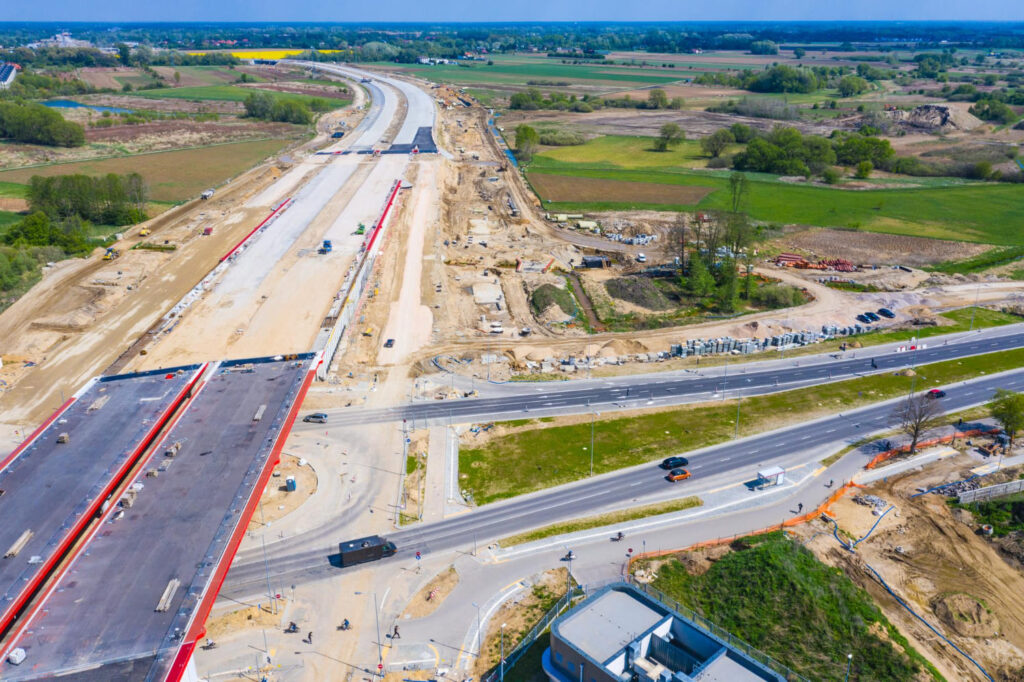
The Capital Region Ring Road project in Odisha is designed to enhance high-speed road connectivity while reducing congestion in surrounding urban corridors.
Key Project Details
- Project Name: Construction of a new Six-Lane Access Controlled Capital Region Ring Road from Bilipada to Gobindpur (Package-II).
- Location: The highway section spans Design Chainage Km. 40+700 to Km. 70+995 in Odisha.
- Execution Mode: The project will be executed under NH(O) and implemented through the Hybrid Annuity Mode (HAM) model.
This ring road will play an important role in strengthening regional road infrastructure and improving long-distance travel efficiency.
NHAI Award Information
The National Highways Authority of India (NHAI), the central agency responsible for highway development, awarded this project after a competitive bidding process.
Key Award Highlights
- Issuing Authority: National Highways Authority of India (NHAI)
- Awarded Company: M/s VRC Constructions (India) Limited
- Date of Award: 27 February 2026
Winning this contract reflects the company’s ability to compete in large-scale highway projects and execute complex infrastructure developments.
Financial Structure of the Project
The financial framework of the project highlights its large scale and strategic importance in India’s infrastructure expansion.
Approved Bid Project Cost
NHAI accepted the bid submitted by VRC Constructions with a Bid Project Cost of ₹1,192,24,40,000 (One Thousand One Hundred Ninety-two Crore Twenty-four Lakh Forty Thousand).
Initial Estimated Cost
The project’s originally estimated cost stood at ₹1,680.60 crore.
Cost Competitiveness
The winning lowest bid was lower than the estimated project cost, demonstrating efficient cost planning and competitive project execution capability.
Such cost competitiveness is a critical factor in large national highway projects.
Hybrid Annuity Mode in Highway Projects
The Hybrid Annuity Mode (HAM) is widely used in Indian highway development because it balances financial risk between the government and the private contractor.
Under this model:
- The government pays 40% of the project cost during construction.
- The remaining 60% is paid through annuity payments after completion.
- Contractors are responsible for construction and maintenance for a defined period.
This approach improves project execution efficiency while ensuring long-term asset quality.


Importance of the Capital Region Ring Road
Ring road infrastructure is essential for modern urban planning and transportation efficiency.
The Capital Region Ring Road in Odisha is expected to deliver several benefits:
Improved Traffic Flow
By diverting through-traffic away from city centers, the ring road will reduce congestion in urban areas.
Faster Freight Movement
High-capacity access-controlled roads allow faster transport of goods between industrial and logistics hubs.
Economic Development
Better connectivity attracts investment, improves regional trade, and strengthens local economies.
Safer Highways
Access-controlled highways reduce traffic conflicts and improve overall road safety.
Role of Infrastructure Companies in National Highway Development
Projects of this scale require construction companies capable of managing:
- Large-scale earthworks and pavement engineering
- Complex bridge and drainage systems
- Traffic management during construction
- Strict quality and safety standards
Companies executing such infrastructure must maintain strong project planning and compliance with national highway guidelines.
The Future of Highway Infrastructure in India
India continues to invest heavily in road infrastructure as part of its economic development strategy. Programs such as Bharatmala Pariyojana aim to expand national highway networks, improve logistics corridors, and strengthen inter-state connectivity.
Projects like the Capital Region Ring Road in Odisha reflect this broader effort to build faster, safer, and more efficient transportation systems.
As infrastructure demand increases, experienced engineering and construction companies will play a critical role in delivering large-scale projects across the country.
Key Takeaways
- NHAI awarded the Six-Lane Capital Region Ring Road project (Bilipada to Gobindpur Package-II) to VRC Constructions.
- The project covers Design Chainage Km. 40+700 to Km. 70+995 in Odisha.
- Construction will be executed under the Hybrid Annuity Mode (HAM).
- The approved Bid Project Cost is ₹1,192.24 crore, which is 29.06% lower than the estimated cost.
- Performance Security and Additional Performance Security are required as per NHAI guidelines.
- The project will strengthen regional mobility, freight movement, and economic growth in Odisha.
Conclusion
The Six-Lane Capital Region Ring Road project in Odisha represents another major step in India’s ongoing highway infrastructure expansion. By improving connectivity between Bilipada and Gobindpur, the project will enhance transportation efficiency and support regional development.
With projects like these being executed through structured models such as the Hybrid Annuity Mode, India’s road network continues to evolve toward higher capacity, safer design, and improved mobility for the future.